Ancient Egyptian stone vessels sit at the center of a surprisingly heated debate because they combine beautiful aesthetics with geometry that looks unusually precise.
Some argue the artifacts must be evidence of lost advanced technology, or even non-human intervention, pointing to their symmetry, thin walls, and hard materials like granite or diorite as things that “shouldn’t” be achievable with simple tools. On the other end, mainstream archaeology attributes them to highly skilled artisans using copper tools, abrasives, and time-intensive techniques, emphasizing that expertise and repetition can produce remarkable results without modern machines. The controversy lives in the gap between those views: we have clear evidence of craftsmanship methods, but not always a complete understanding of how that level of consistency was achieved, which leaves just enough mystery for speculation to thrive.
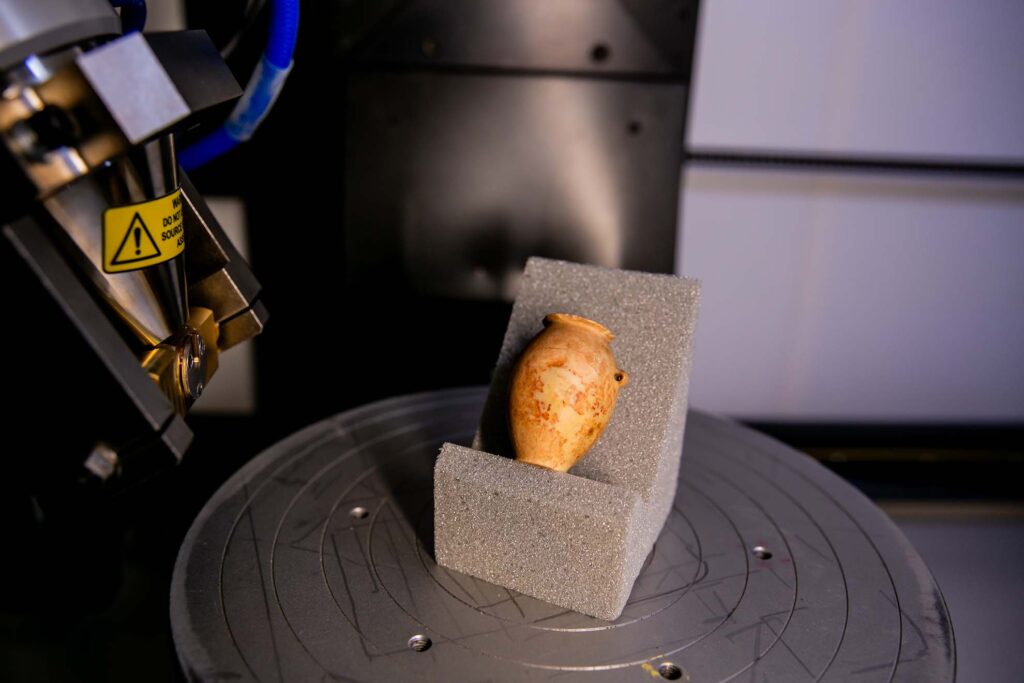
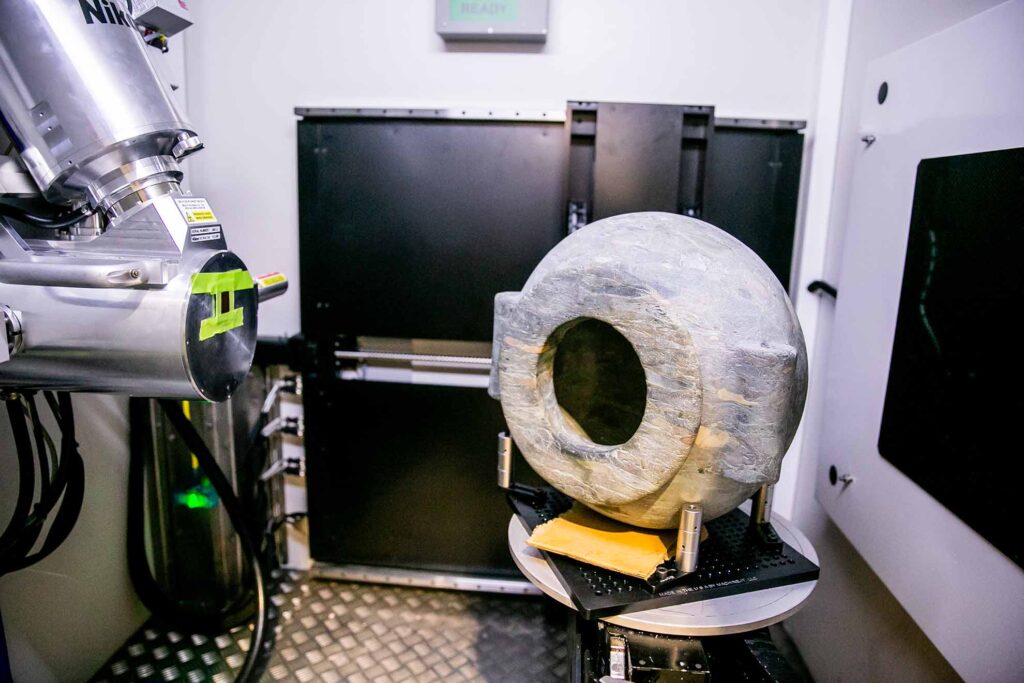
Small Eqyptian Vessel inside Industrial CT Scanner
Our team has scanned around 50 artifacts over the last several years, and while some are incredibly precise, others demonstrate the imperfections of human hands.
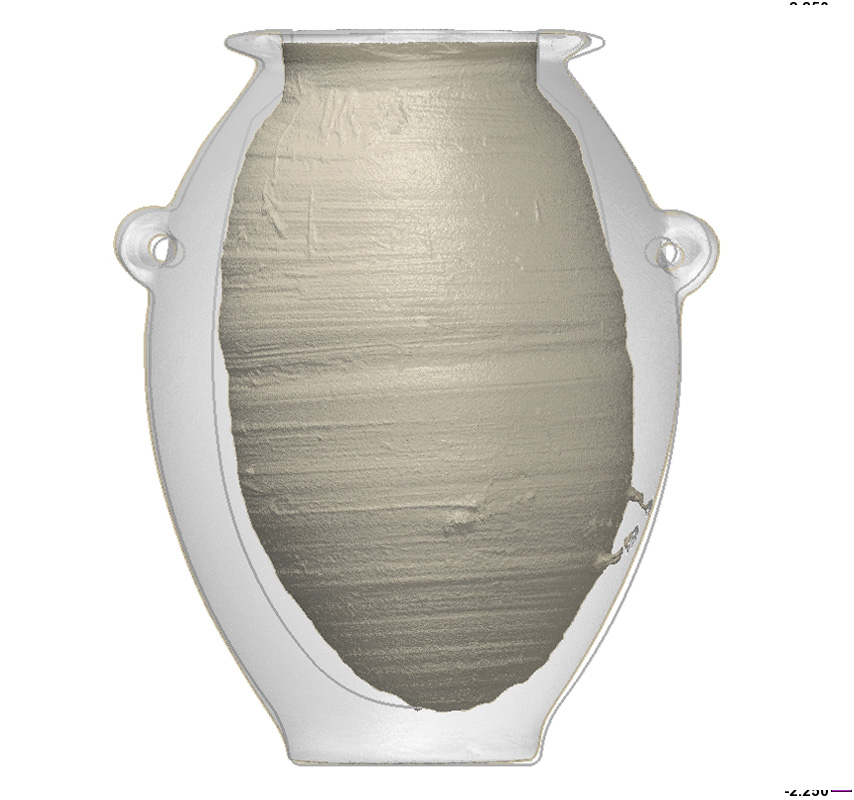
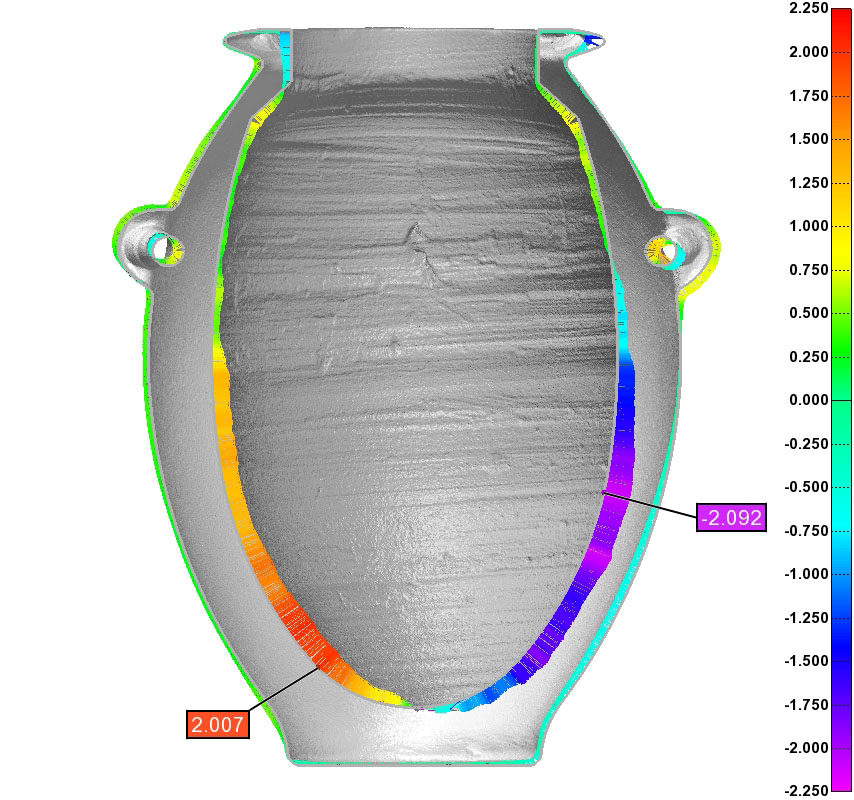
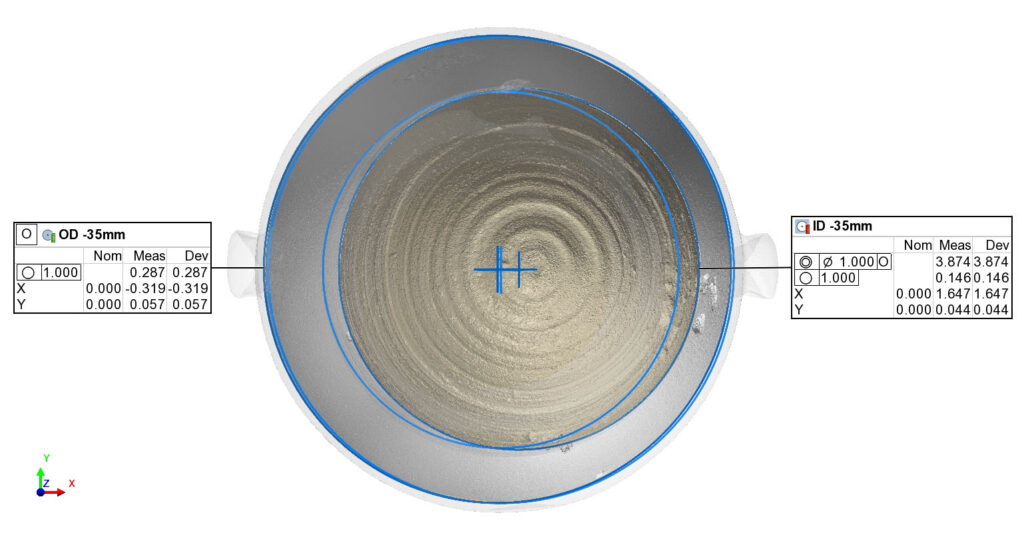
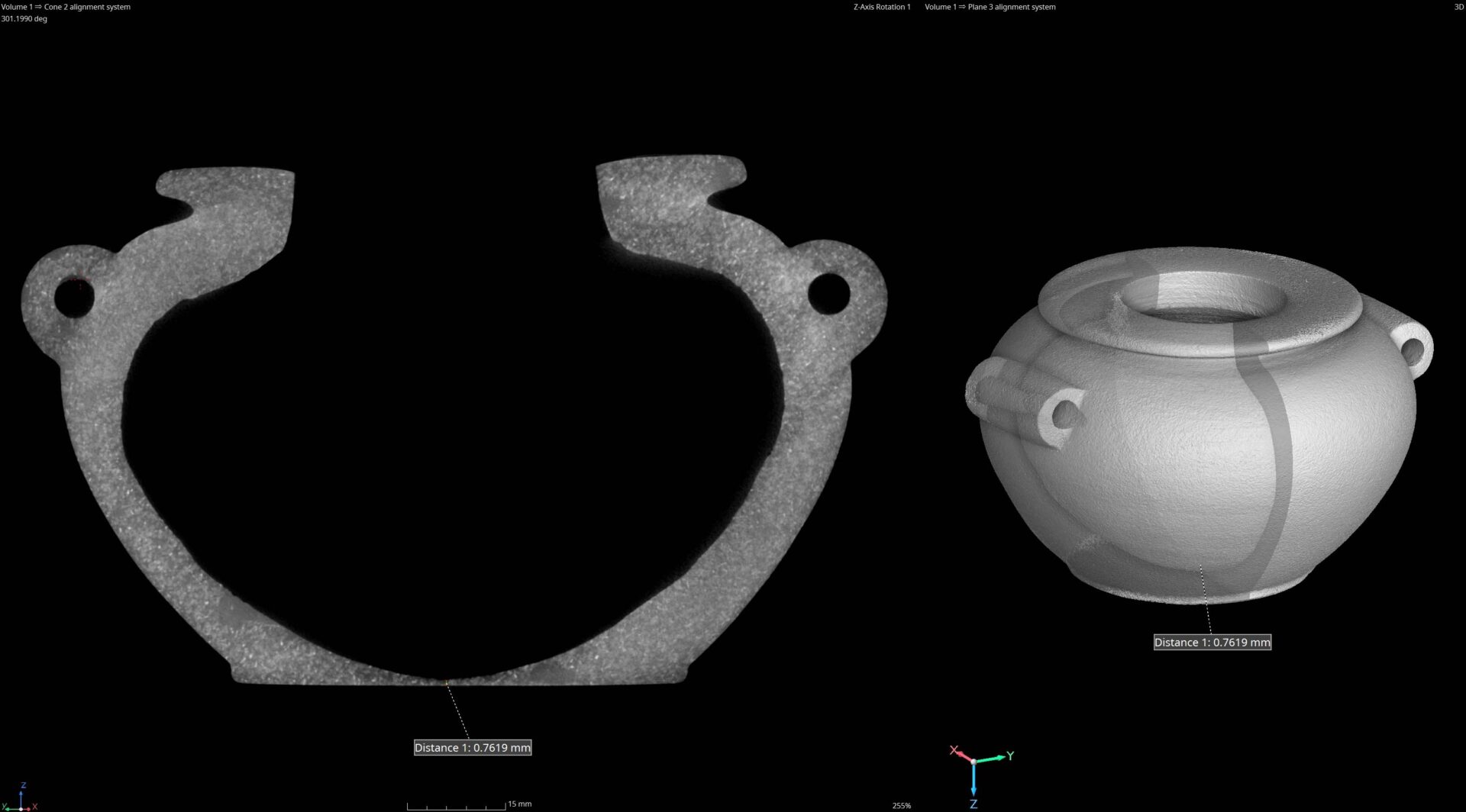
The vessel has significant wall thickness variation beyond 2mm
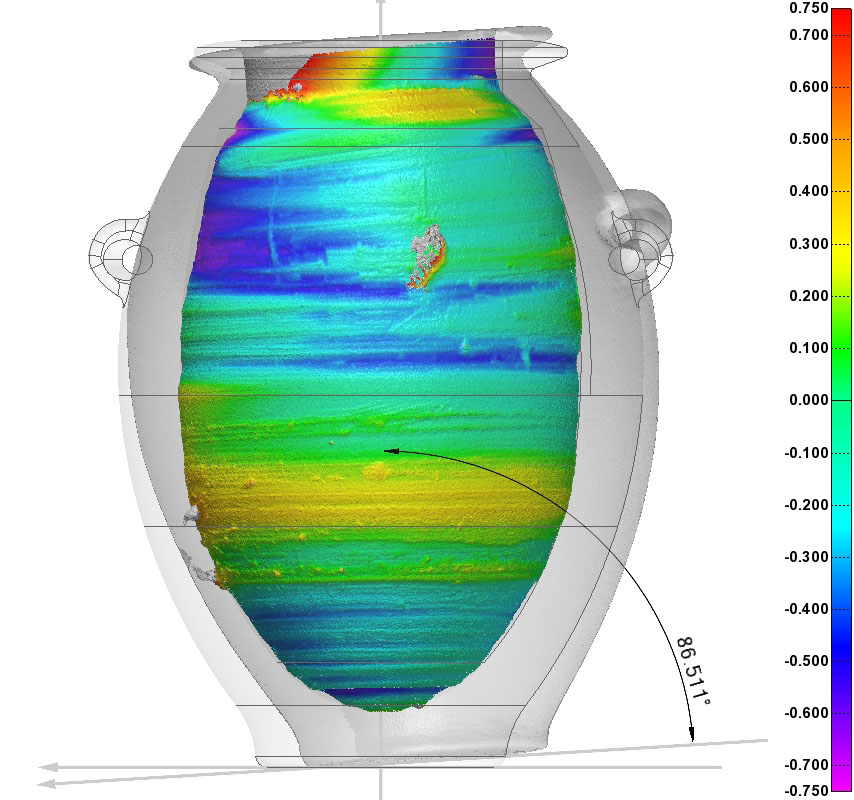
Internal surface grooves are not consistent in direction, angle, or depth
OD to ID concentricity approaches 4mm
Handles are not center to the normal axis of the vessel
Central axis to top and bottom planes shows an angular deviation of 3.5 degrees.
The circular grooves and measured circularity of the OD & ID are very tight, indicating this was produced using a multi-step turning process.
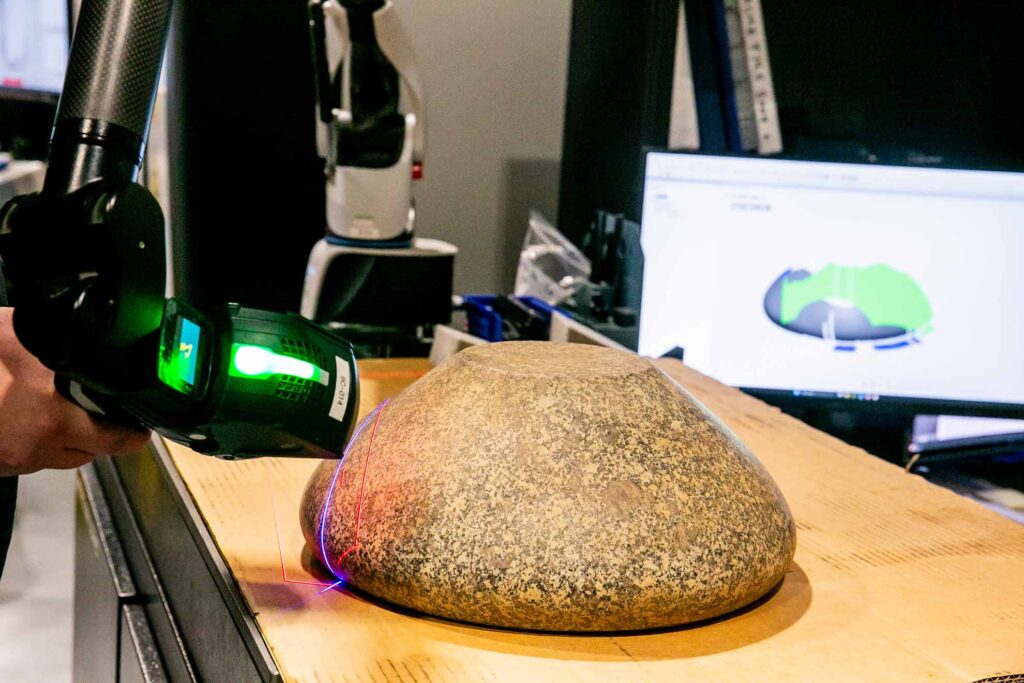
For samples that are not conducive to CT scanning due to size, thickness, or geometry, we utilize a portable laser scanner to capture external surface geometry. This allows for comparable analysis of form, symmetry, and dimensional variation where volumetric data is not achievable.
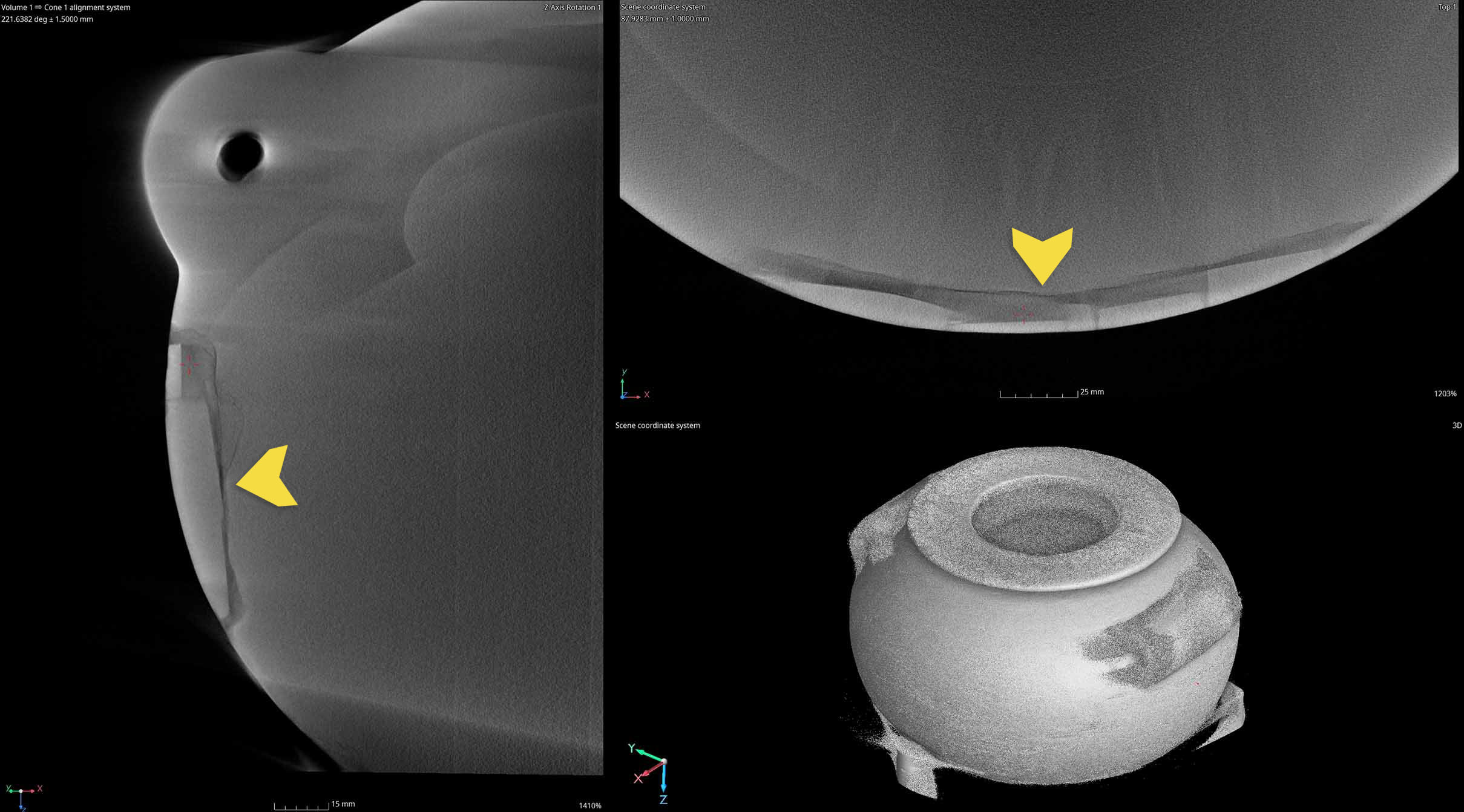
This 70-pound vessel was fixtured within our large-format CT scanner. The scan revealed generally consistent material density throughout the specimen, with the exception of a localized region beneath one of the handles. In this area, a series of cracks extend toward the base, accompanied by clear evidence of repair. Multiple fragments of similar material appear to have been adhered and reworked to restore the original surface, with the filler or adhesive exhibiting significantly lower density than the surrounding matrix.
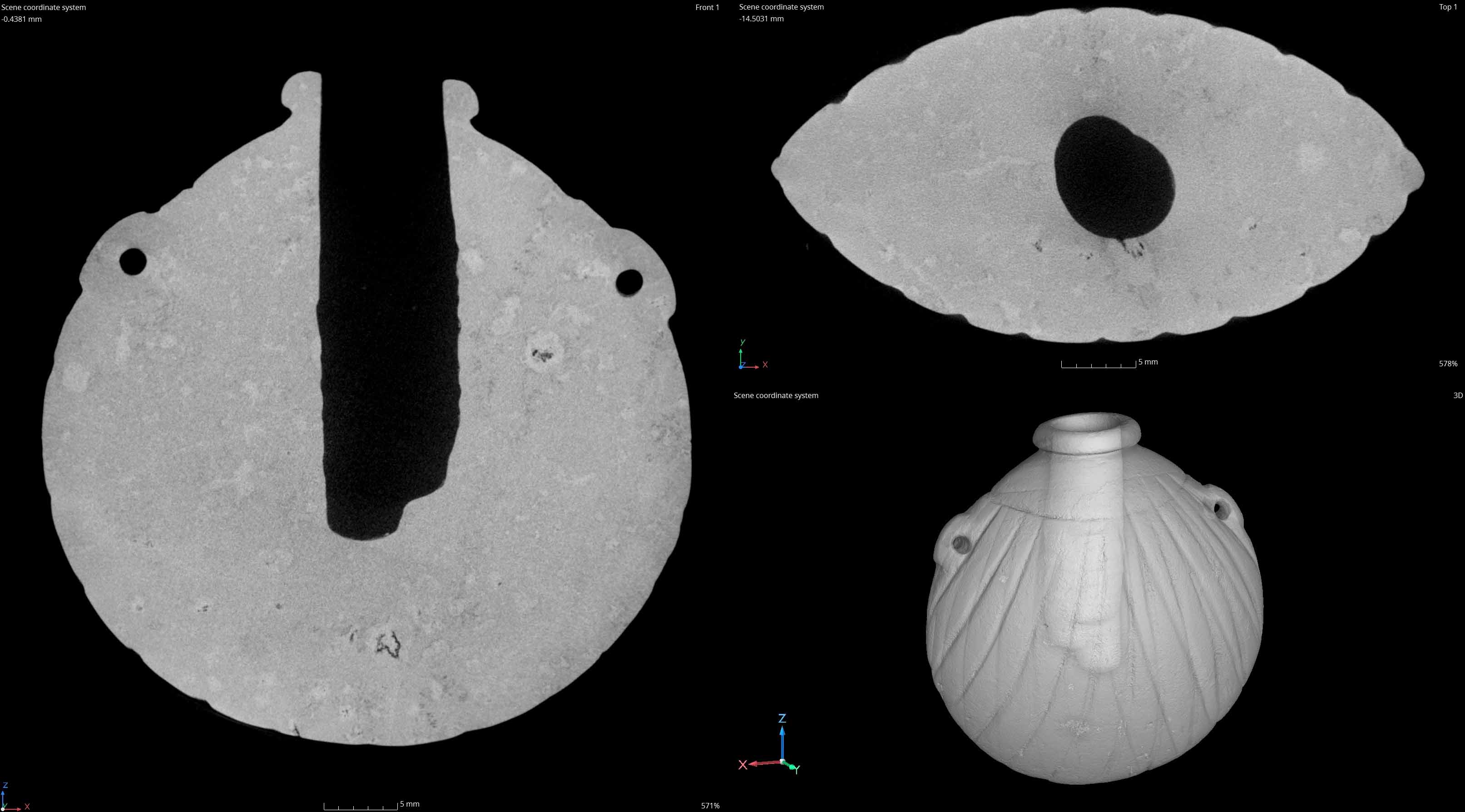
The sides of this shell vessel are not symmetrically opposite. Virtual slicing and mirroring show spline deviation between opposing surfaces, and the internal structure exhibits multiple, non-coaxial bores, pointing to inconsistent alignment throughout the process.
The wall thickness of this medium sized vessel is less than 1mm thick. This level of uniformity in a hard stone material presents significant challenges even with modern tooling, particularly given the constrained internal geometry and limited access through the vessel opening.